0% complete
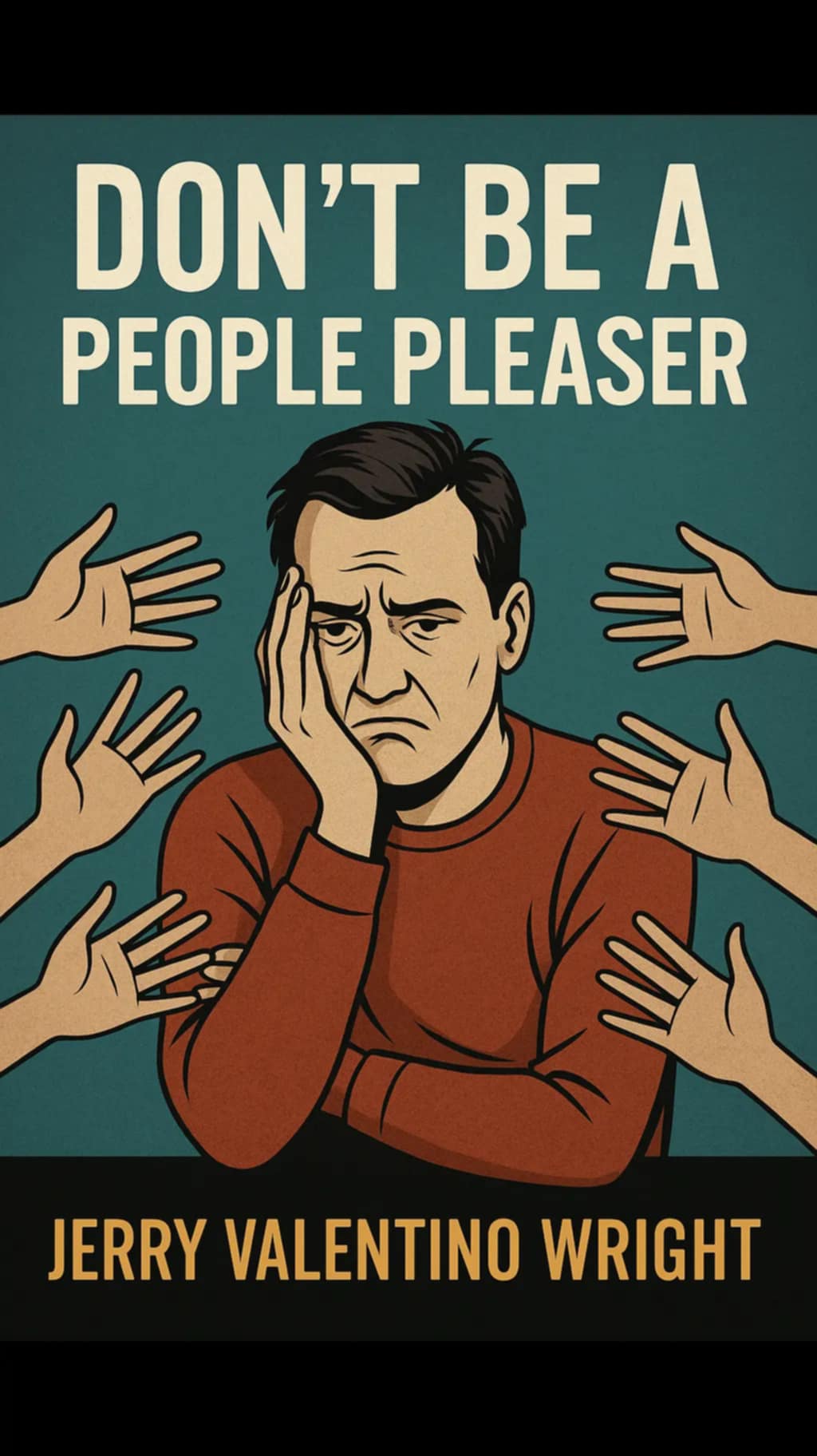
Don't Be a People Pleaser

Don't Be a People Pleaser

By Jerry Valentino Wright

Non-FictionSelf-HelpPersonal Growth

You can't please everybody — that's a bottomless pit with no reward. This is not a book about becoming cold. It's about reclaiming your worth, protecting your peace, and learning to say: my energy is valuable, my time is expensive, and if you can't respect that, you don't deserve me.

Buy on Amazon

Prologue

You can’t please everybody. That’s a bottomless pit with no reward. The truth is—most people don’t even know what they really want. They ask for one thing, then criticize it when they get it. They say they want love, loyalty, and consistency, but when it’s handed to them, they sabotage it with old wounds, fear, or selfishness. And while you’re breaking your back to show up for everybody else, who’s showing up for you? It feels like pouring water into a dead plant—giving and giving until you’re drained and empty. They expect your support, your time, your ear, your love, but when you need someone to pour into you? Silence. This book is not about becoming cold. It’s about reclaiming your worth. It’s about recognizing when love doesn’t love you back, when friends only show up with their hand out, and when “family” feels more like competition than connection. It’s about learning to say: “My energy is valuable. My time is expensive. If you can’t respect that—you don’t deserve me.”

Chapter 1 – Why Pleasing Never Works

Part 1: The Empty Chase

You spend your life chasing approval like it’s oxygen, but no matter how much you give, it’s never enough. You buy the gifts, you show up every time, you sacrifice your peace—yet all you get in return is silence, complaints, or shifting expectations. The problem isn’t that you didn’t give enough. The problem is that approval is a moving target. People will clap for you one moment and criticize you the next, because their satisfaction isn’t rooted in truth—it’s rooted in mood, trauma, jealousy, or insecurity. And every time you try to keep up, you’re running in circles that leave you drained. The truth is this: people’s happiness is not your responsibility. You can love them, help them, and support them, but the minute you try to be enough for everybody, you’ll always end up empty.

Part 2: The Illusion of Approval

Approval feels good—for a moment. A compliment, a thank-you, a quick smile—those things make you feel valued. But the truth is, approval doesn’t last. It’s like fast food for the soul: it fills you up temporarily, but you’re hungry again an hour later. That’s because external validation isn’t built to sustain you. You become addicted to it, chasing the next compliment, the next pat on the back, the next nod of acceptance. But when it doesn’t come, you start questioning your worth. You think you’re the problem, when really, the whole game is broken. Approval is like smoke—it looks real, but try to grab it, and it disappears in your hand. You don’t need smoke. You need substance. The only approval that lasts is the approval you give yourself.

Part 3: The Cost of Silence

Silence costs more than you think. Every time you swallow your feelings, every time you smile when you want to scream, every time you let someone cross your boundaries without speaking up—you pay a price. And the price is you. You lose your voice. You lose your confidence. You lose your identity. People pleasers think silence keeps the peace, but in reality, it builds resentment. You might avoid conflict in the moment, but the war is happening inside you. And sooner or later, that war will spill out in anger, exhaustion, or bitterness. Choosing silence isn’t kindness—it’s self-betrayal. True peace doesn’t come from pretending everything is fine. It comes from being brave enough to speak your truth, even if your voice shakes, even if not everyone claps.

Part 4: The Cycle of Draining Relationships

Draining relationships always follow the same cycle. At first, you feel needed. They call you for advice, they lean on you for money, they run to you when life falls apart. You pour into them because you’ve got a big heart, and it feels good to be “the strong one.” But here’s the catch: it never ends. Once people see you as their lifeline, they don’t stop taking. They show up empty, expecting you to fill them, again and again. And when you finally have nothing left to give? They disappear—or worse, they call you selfish. The truth is, some people don’t want healing; they want a host. They don’t want to grow; they want to drain. And if you’re not careful, they’ll drain you until you don’t recognize yourself anymore.

Part 5: Choosing Self-Respect First

Choosing yourself isn’t selfish—it’s survival. You’ve spent years pouring into others, thinking your worth comes from how useful you are. But real strength isn’t in pleasing—it’s in protecting your peace. Self-respect looks like saying “no” without guilt. It looks like walking away from people who only take. It looks like prioritizing your rest, your dreams, your voice. Because here’s the truth: the people who truly love you won’t leave when you set boundaries. They’ll respect you more for it. The ones who disappear? They were only around for what they could take anyway. Self-respect is the filter that separates real from fake, love from convenience, loyalty from leeching. The day you choose yourself is the day you stop begging for scraps and start living in abundance. Respect yourself, and watch your whole world shift.
Chapter 2 – Recognizing the Signs

Part 1: When Love Doesn’t Love You Back

Real love doesn’t confuse you, drain you, or leave you second-guessing your worth. But when you’re a people pleaser, you ignore the signs because you’re too busy giving. You tell yourself, “Maybe if I love harder, they’ll change.” But the truth? If love doesn’t love you back, it’s not love—it’s dependency, convenience, or control. The hardest part is admitting that the energy you’re pouring in isn’t being matched. You can cook the meals, pay the bills, show up in every way possible, but if they can’t show up for you emotionally, physically, or spiritually—you’re in a one-way relationship. Recognizing this isn’t about bitterness; it’s about honesty. If love leaves you feeling empty instead of full, it’s not love—it’s a warning sign. And the sooner you accept that, the sooner you can walk into freedom.

Part 2: Fake Friends, Real Lessons

Fake friends are some of life’s best teachers. They teach you what loyalty doesn’t look like. They teach you the weight of silence when you need someone most. They teach you how it feels to be used for what you can do, instead of loved for who you are. At first, it hurts. You feel betrayed. You ask yourself, “How could they?” But over time, you realize their betrayal was a blessing. Fake friends expose themselves so you can see the truth. They clear the stage so real friends have space to enter. The lesson is this: don’t fight to keep fake people in your life. Don’t beg for their attention or chase their loyalty. Let them go. Their exit is your elevation. Because once you recognize fake, you’ll never settle for less than real again.

Part 3: Family Isn’t Always “Family”

Blood makes you related. Loyalty makes you family. Some of the deepest wounds don’t come from strangers—they come from the people who share your last name. You expect family to support you, but sometimes they’re the first to criticize, compete, or doubt you. You want unity, but all you get is gossip or comparison. The truth is, not everyone in your family wants to see you win. Some only show up to measure your failures against their comfort. But here’s the shift: family isn’t just the people you’re born into—it’s the people you build with. Chosen family, the ones who call to check on you, who celebrate your wins, who pray for you without envy—that’s real family. Recognize the difference. Don’t cling to toxic ties just because of blood. Choose loyalty over DNA every time.

Part 4: Emotional Parasites & Energy Leeches

You ever notice how some people only come alive when you answer the phone? They don’t call to celebrate, encourage, or uplift. They call to dump their problems, drain your energy, and leave you feeling heavy when you hang up. That’s not friendship—that’s parasitism. An emotional parasite doesn’t care if you’re tired, busy, or broken yourself. They just want to feed off your energy. And if you allow it, they’ll drain you until you’re too weak to even handle your own battles. Recognizing energy leeches is about paying attention to how you feel after you leave someone’s presence. Do you feel lighter, inspired, refreshed—or do you feel drained, small, and exhausted? That’s the sign. Protect your energy. Not everyone deserves access to your spirit.

Part 5: Spotting Manipulation Early

Manipulation wears many masks. Sometimes it looks like guilt-tripping: “After all I’ve done for you…” Sometimes it looks like control: “If you loved me, you’d…” Other times, it’s subtle—shifting blame, twisting words, making you feel like the problem when you’re not. The danger is, people pleasers often miss these signs because they’re too busy trying to keep the peace. But here’s the truth: peace built on manipulation isn’t peace at all—it’s prison. Spotting it early requires confidence. Trust your gut. If something feels off, don’t ignore it. Pay attention to patterns, not excuses. If someone consistently leaves you questioning your sanity or your worth, it’s not love, friendship, or respect—it’s control. Recognizing manipulation early saves you years of pain. It’s better to walk away now than to live trapped later.

Chapter 3 – Building Boundaries

Part 1: The Power of “No”

The smallest word in the English language is also the strongest: No. But people pleasers fear it like it’s poison. You’ve been trained to believe “no” is rejection, selfishness, or weakness. But really, “no” is protection. It’s the wall that guards your peace, your time, your sanity. Every time you say “yes” when your spirit is screaming “no,” you betray yourself. You chip away at your own respect. The truth? You don’t owe anyone constant access to your life. “No” doesn’t need a paragraph, a justification, or an apology. It is a full sentence. Say it. Own it. Let it stand. Because the right people will respect your boundaries, while the wrong ones will reveal themselves when they can’t control you anymore. The word you’ve been scared of is the same word that will set you free.

Part 2: Protecting Your Energy Bank

Think of your energy like money in a bank. Every day, you wake up with a limited balance. Some people deposit into your account with love, support, and encouragement. Others withdraw—complaints, demands, negativity, drama. The problem is, people pleasers keep giving overdraft protection. You let people take more than you have, and then you’re left in debt—mentally, emotionally, spiritually. Protecting your energy bank means setting limits. It means asking yourself: Does this person bring interest, or do they drain my savings? It’s okay to shut down accounts that only withdraw. It’s okay to charge interest—meaning they must give back what they take. And it’s okay to lock your vault completely. Your energy is your currency. Spend it wisely, because once it’s gone, you can’t get it back.

Part 3: Stop Explaining Yourself

One of the most exhausting habits of a people pleaser is over-explaining. You decline an invitation and feel the need to write a three-page essay about why. You set a boundary and immediately apologize for it. You make a choice for yourself and then try to convince everyone else it was “reasonable.” Here’s the truth: explanation is often another form of begging for approval. But you don’t owe anyone a PowerPoint presentation about your decisions. Boundaries don’t require justification. If you say no, it’s no. If you leave, it’s because you needed to. If you choose yourself, that’s enough. Stop shrinking your choices down to make others comfortable. Stop apologizing for protecting your peace. You’re not guilty—you’re grown. And grown people don’t need permission slips to live their lives.

Part 4: Time Is Money—Value It

Time is the one resource you can’t get back. You can make more money, buy another car, or replace broken things—but once time is gone, it’s gone forever. People pleasers waste years giving their minutes, hours, and days to people who never deserved them. You answer late-night calls, rearrange your schedule, sit in draining conversations, and put your dreams on hold to meet everyone else’s needs. And what do you get in return? Nothing but regret and resentment. It’s time to start billing your life correctly. Treat your time like it costs thousands an hour—because it does. Every hour wasted on nonsense is an hour you’ll never get back. Value your time the way billionaires value money. Protect it like your life depends on it—because it does.

Part 5: Emotional Minimalism

Minimalism isn’t just about decluttering closets—it’s about decluttering your soul. Emotional minimalism means keeping only what adds peace, joy, and growth to your life, and throwing out everything else. It’s recognizing that carrying everyone’s problems, emotions, and expectations isn’t noble—it’s heavy. Too heavy. People pleasers are emotional hoarders. You hold onto every guilt trip, every responsibility, every complaint, every obligation. No wonder you’re exhausted. Emotional minimalism says: I don’t need it. I don’t need the drama. I don’t need the chaos. I don’t need the guilt. I don’t need the constant proving. What I need is space to breathe, think, and live. Life gets lighter when you stop carrying everyone else’s baggage. Keep the connections that bring clarity and peace. Release the rest. Your spirit will thank you.

Chapter 4 – Reclaiming Self-Worth

Part 1: Who’s Pouring Into You?

You’ve been the shoulder, the wallet, the therapist, the cheerleader. But when the dust settles and you’re the one breaking, who shows up for you? That’s the real test of relationships—not who calls when they need something, but who calls just to check if you’re breathing. Self-worth begins with inventory. Stop counting how many people you’ve carried, and start counting how many carried you. If the math doesn’t add up, don’t ignore it. You’re not meant to be everyone’s well while you’re dying of thirst. If people can’t pour back into you, they don’t deserve endless refills. You are not a public fountain—you are a priceless resource. Protect yourself like gold. Because the day you realize you’re worth more than one-sided relationships, you’ll never allow yourself to be drained again.

Part 2: The Value of Being Alone

Loneliness and solitude are not the same. Loneliness is begging for company just to feel something. Solitude is choosing your own company and realizing it’s enough. People pleasers hate being alone because silence feels like rejection. But the truth is, being alone is where you learn your own worth. You discover you can eat by yourself and still feel full. You can laugh at your own jokes. You can build dreams without waiting for applause. Solitude teaches you that you’re not incomplete—you’re whole. And once you embrace that, you stop tolerating half-hearted love just to avoid being alone. Alone is not punishment—it’s power. Because once you learn to love your own presence, you’ll only accept people who add value, not people who fill space.

Part 3: Loving Without Losing Yourself

Love is supposed to build you, not break you. But too often, people pleasers disappear inside relationships. You shrink your needs, mute your voice, abandon your dreams—just to keep someone else comfortable. That’s not love. That’s erasure. Real love doesn’t ask you to sacrifice who you are. Real love celebrates you, elevates you, and respects your boundaries. If you can’t love without losing yourself, then it’s not love—it’s captivity. The greatest love you can give is the love you give yourself first. When you know your value, you won’t bend just to keep someone. You’ll stand tall, and the right person will meet you at your height. Stop negotiating your identity to earn scraps of affection. You deserve a love that sees you, not a love that swallows you.

Part 4: Respect > Attention

Attention is cheap. It’s likes, texts, quick flattery, fake smiles. But respect—that’s expensive. And too many people pleasers trade respect for attention because attention feels good in the moment. You let people talk to you any kind of way as long as they don’t leave. You accept crumbs because at least it’s something. But here’s the truth: attention fades the moment you stop entertaining. Respect lasts even when you’re not in the room. Respect is someone saying your name with weight, not mockery. Respect is someone honoring your boundaries, not testing them. Stop chasing attention like it’s proof of love. Choose respect every time. Because the day you demand respect is the day you stop being disposable. Attention gets you noticed, but respect keeps you valued.

Part 5: Living Free—Not Pleasing, But Thriving

Freedom doesn’t come when everybody loves you—it comes when you stop caring if they don’t. Living free is waking up without the weight of proving yourself. It’s laughing without wondering who approves. It’s saying “no” without guilt and “yes” without fear. Thriving begins when you stop being addicted to validation and start being addicted to peace. You weren’t born to be everybody’s answer. You weren’t born to fit into everybody’s mold. You were born to be whole, bold, and unapologetic. People pleasers survive, but they don’t thrive. And you weren’t put here just to survive. You were put here to shine, to grow, to create, to love without chains. Thriving is your birthright. The day you choose freedom over pleasing is the day you finally start living.

Chapter 5 – The Hidden Cost of Pleasing

Part 1: The Weight You Can’t See

People think pleasing is harmless—just doing a favor here, saying yes there. But the real weight of it isn’t in the moment, it’s in the build-up. Every time you agree when you don’t want to, that weight lands on your back. Every time you silence yourself just to keep the peace, another stone is added. At first, you barely notice. You tell yourself, “It’s not a big deal.” But over years, that weight becomes a burden so heavy you can’t even remember who you are without it. The smiles you force, the favors you resent, the energy you waste—it all piles up until you’re buried under a mountain of expectations that were never yours to carry. The cost of pleasing isn’t small. It’s everything—your freedom, your joy, your self.

Part 2: Burnout in Disguise

Burnout doesn’t always look like exhaustion—it often looks like silence. It’s you showing up with a smile while you’re dead inside. It’s you saying “I’m fine” when you haven’t been fine in months. It’s the way you keep pouring into everyone else’s glass until yours is bone dry. People pleasers mistake this burnout for loyalty, as if draining yourself is proof of love. But the truth is, burnout is betrayal—of yourself. You can’t love well when you’re running on empty. You can’t show up fully when you’re only surviving. Burnout is your body’s alarm system, screaming: “This isn’t sustainable.” If you ignore it long enough, it will collapse you. The disguise may fool others, but deep down you know: pleasing is killing you slowly, one “yes” at a time.

Part 3: The Silent Resentment

Resentment grows in silence like mold in the dark. You keep saying yes to things you don’t want to do. You keep letting people take more than they give. On the outside, you’re smiling, nodding, keeping the peace. But inside? You’re screaming. You’re keeping score of every unreturned favor, every unanswered call, every time someone left you hanging after you showed up for them. That silent resentment doesn’t disappear—it leaks. It shows up in your tone, your posture, your mood. It robs you of joy, even in places where you should be happy. And here’s the trap: the people you’re trying to please never see the damage, because you hide it so well. Silent resentment doesn’t just poison relationships—it poisons you. The cost of pleasing isn’t peace. It’s bitterness, disguised as love.

Part 4: The Identity You Sacrifice

Every time you bend yourself to please others, a part of you disappears. You stop wearing what you like because they don’t approve. You stop chasing your dreams because it makes them uncomfortable. You laugh softer, speak quieter, move smaller—all to fit their mold. One day, you look in the mirror and wonder: “Who am I?” That’s the hidden cost of pleasing—you sacrifice your identity piece by piece until you’re a stranger to yourself. You can’t even answer simple questions about what you want because your life has been built on what everyone else wanted from you. Pleasing doesn’t just take your time. It takes your voice. It takes your dreams. It takes your soul. And nothing is more expensive than losing yourself while trying to keep everyone else happy.

Part 5: The Freedom You Deserve

Freedom isn’t found in more approval—it’s found in release. Release from the need to be liked. Release from the weight of always being “enough.” Release from the pressure to be everything for everyone else. When you finally stop pleasing, you taste freedom in its purest form. You can say no without guilt. You can say yes without fear. You can stand tall in who you are, even if not everyone claps. The freedom you deserve is waiting on the other side of courage—the courage to stop being addicted to validation, the courage to stop betraying yourself for acceptance. Once you taste it, you’ll never go back. Freedom is not given by others—it’s taken back by you. And once you claim it, your life becomes yours again.

Chapter 6 – When Love Doesn’t Love You Back

Part 1: The Mirror Test

Love should make you glow, not drain your shine. The easiest way to know if love loves you back is to check the mirror. When you’re with that person, do you see life in your eyes or emptiness? Do you smile out of joy or out of habit? The mirror doesn’t lie. If your reflection looks tired, broken, or smaller every time you’re in that relationship, it’s not love—it’s erosion. Real love adds color, makes you stand taller, fills your face with peace. Fake love dims you, makes you doubt yourself, and strips you of joy one layer at a time. Stop waiting for words and start looking at results. If the love you’re giving isn’t reflected back in your spirit, then it’s not love—it’s a warning you can’t afford to ignore.

Part 2: Chasing Ghosts

People pleasers stay in empty relationships because they’re chasing ghosts. You’re not in love with the person in front of you—you’re in love with their potential, or the memory of who they were. You keep holding on, hoping the person who once loved you right will show up again. But here’s the truth: ghosts don’t come back. You can’t resurrect what’s dead. Love that doesn’t love you back leaves you clinging to shadows while your reality crumbles. You replay old moments, reread old texts, relive old promises—but all you get is disappointment. Stop chasing what’s gone. If love only lives in your memories and not in your present, it’s not love anymore. It’s a ghost. And no matter how hard you chase it, you’ll never hold something that’s already gone.

Part 3: The One-Sided Investment

Love is supposed to be a partnership, not a one-man show. But when you’re a people pleaser, you mistake effort for reciprocity. You cook, clean, sacrifice, show up, pay the bills, bend your boundaries—and still, you’re alone in the fight. That’s not partnership. That’s slavery dressed as love. Relationships should be mutual deposits into each other’s lives, not you pouring everything while they sit back and take. Ask yourself: if I stopped giving today, what would be left? Would they even notice, or would they just find someone else to drain? The answer is usually the truth you don’t want to face. Love that doesn’t love you back will happily take everything you give until there’s nothing left of you. That’s not love. That’s theft.

Part 4: The Excuse Factory

When love doesn’t love you back, your mind becomes an excuse factory. “They’re just stressed.” “They don’t know how to show it.” “It’ll get better.” Excuse after excuse to justify why you’re starving in a relationship that should be feeding you. People pleasers stay because they believe loyalty means enduring pain. But loyalty without reciprocity is self-destruction. The more excuses you make for someone else’s lack of effort, the longer you delay your own healing. Stop explaining away mistreatment. Stop excusing the inexcusable. If they wanted to, they would. If they cared, you would know it. If they loved you, you wouldn’t have to guess. Love doesn’t need defending. If you spend more time justifying their behavior than enjoying their presence, that’s not love—it’s bondage.

Part 5: Walking Into Freedom

The scariest step is also the most liberating: walking away. People pleasers cling to relationships long past their expiration date, terrified of being alone. But freedom is better than fake love. Freedom is waking up without the weight of begging for affection. Freedom is silence that heals instead of silence that punishes. Freedom is choosing yourself after years of choosing someone who never chose you. Walking away doesn’t mean you failed—it means you finally recognized your worth. The truth is, you’ll never find real love while you’re clinging to counterfeit. You have to let go of what doesn’t love you back so you can make room for what does. Freedom isn’t the end of your story. It’s the beginning. And once you step into it, you’ll never settle again.

Chapter 7 – Fake Friends, Real Lessons

Part 1: The Disguise of Loyalty

Fake friends are actors, and friendship is their stage. At first, they clap the loudest, stand closest, and call you “family.” But loyalty isn’t about how loud someone cheers when you’re winning—it’s about who’s still around when you’re losing. Fake friends love the spotlight but vanish when the lights dim. They don’t care about your struggle; they care about proximity to your shine. Their loyalty is conditional: as long as you benefit them, they’re around. Once you can’t serve their agenda, they disappear, or worse, they betray you. The disguise is convincing at first, but time always pulls the mask off. The lesson? Don’t judge friendship by words, judge it by consistency. A real friend doesn’t just say, “I got you.” A real friend proves it—over and over again.

Part 2: The Transaction Trap

With fake friends, everything is a transaction. They only call when they need something—money, favors, connections, a listening ear. But when you need them? Excuses. They’re “too busy,” “going through something,” or simply silent. People pleasers fall hardest into this trap because you give freely, thinking it’s love, when really, it’s business. They don’t see you as a friend—they see you as a resource. And the more you give, the more they take. Until one day, you realize your friendship has been nothing but a one-sided investment that never paid dividends. The trap is dangerous because it makes you question your own worth. But the truth is, it’s not you—it’s them. Stop financing relationships that don’t bring a return. Real friends deposit into you, not just withdraw.

Part 3: Betrayal as a Blessing

Betrayal hurts because it comes from those you trusted most. But here’s the twist: betrayal is often the blessing you didn’t know you needed. Fake friends expose themselves by crossing lines they were never supposed to cross. And when they do, your vision clears. You finally see them for who they are, not who you wished they were. Yes, it stings. Yes, it breaks your heart. But betrayal removes dead weight. It clears the stage so you can see who’s really standing with you. The blessing is in the exposure. Fake friends are lessons in disguise, teaching you what loyalty does—and doesn’t—look like. Instead of cursing the betrayal, thank it. It freed you from investing in someone who was never worth the price of your loyalty in the first place.

Part 4: Recognizing Patterns, Not Excuses

Fake friends always leave a trail if you’re willing to look. They cancel last-minute, forget important dates, make jokes at your expense, or disappear during your storms. But people pleasers overlook these red flags because you want to believe their excuses. “They’re just busy.” “They didn’t mean it.” “They’ll do better.” Stop believing excuses and start paying attention to patterns. One missed call isn’t betrayal, but a hundred ignored calls is a pattern. One slip-up isn’t fake, but consistent absence when you need them is. Patterns don’t lie. Excuses do. Once you train your eyes to recognize behavior instead of listening to empty words, you’ll see who’s really for you. Friendship isn’t about perfect—it’s about presence. And if their pattern is always absence, they’re not a friend.

Part 5: Choosing Quality Over Quantity

One real friend is worth more than a hundred fake ones. People pleasers chase numbers, thinking more friends means more love. But the truth is, quantity often dilutes quality. You don’t need a crowd—you need a circle. The kind of circle that protects you, prays for you, pushes you higher, and checks you when you’re wrong. Real friendship is rare because it’s not built on convenience; it’s built on consistency. Fake friends will always outnumber the real, but that’s not your problem. Your job is to filter. Stop chasing approval from the many and start nurturing the loyalty of the few. Life is too short to spend on shallow connections. Choose depth over popularity, loyalty over clout, quality over quantity. Because when storms hit, the crowd scatters—but your circle stays.

Chapter 8 – Family Isn’t Always “Family”

Part 1: Blood Doesn’t Guarantee Loyalty

We’re taught from birth that “family is everything.” But if you look around, you’ll see that bloodlines don’t always guarantee loyalty. Some of the coldest betrayals come from the same people who share your last name. They know your story, your struggles, your secrets—yet they use them as weapons instead of shields. They’ll smile at the family reunion, then gossip behind your back the next day. They’ll cheer in public but compete in private. Family isn’t proven by DNA—it’s proven by devotion. Loyalty is thicker than blood. And if your bloodline refuses to respect you, protect you, or support you, then all you’ve got is relatives, not family. The truth? Some strangers will treat you better than your kin. Blood may connect bodies, but loyalty is what connects souls.

Part 2: Jealousy in the Bloodline

It’s wild, but sometimes the people who should clap the loudest for you are the ones who secretly hope you fail. Family jealousy runs deep. They don’t want you to rise higher than them, because your success shines a spotlight on their stagnation. Instead of celebrating your wins, they minimize them. Instead of cheering your growth, they whisper doubts. People pleasers brush this off, thinking, “That’s just how they are.” But jealousy in the bloodline is poison. It eats away at trust, love, and unity. Pay attention to who avoids celebrating you. Pay attention to who changes the subject when you share good news. That silence is telling. Real family isn’t threatened by your shine—they’re inspired by it. If your growth makes them uncomfortable, don’t shrink. Let them choke on their own envy.

Part 3: The Funeral Test

Want to know the truth about family? Watch how they act when someone dies. Funerals pull the mask off. Suddenly, cousins you haven’t seen in years show up—not for unity, but to argue about money, land, or inheritance. Brothers and sisters stop speaking over who got what. The same people who wouldn’t check on you while you were alive fight over what you left behind. It’s ugly, but it’s real. People pleasers stay blind to this because you want to believe family will always be there. But the funeral test exposes everything. Family bonds aren’t measured in death—they’re measured in life. Who checked on you when you were struggling? Who showed up when you needed them? That’s family. The rest are just waiting for the reading of the will.

Part 4: Breaking the Generational Curse

Every family has cycles: secrets, addictions, favoritism, silence, betrayal. And people pleasers keep these cycles alive because you’re scared to break tradition. You keep quiet to “keep the peace,” even when the family is falling apart. But silence is how curses survive. Breaking free means telling the truth—even if it makes you the “black sheep.” It means saying no to toxic gatherings, refusing to carry burdens that aren’t yours, and building a healthier legacy for the family you create. Don’t let fear of being judged keep you trapped in dysfunction. Someone has to break the chain, and that someone might be you. Real love doesn’t demand that you carry generational curses—it demands that you end them. The moment you choose healing over tradition, you redefine what family truly means.

Part 5: Choosing Your Own Family

Family isn’t just who you’re born with—it’s who you build with. Sometimes, the people who love you best share no blood with you at all. They’re the friends who call just to check on you. The mentors who guide you. The community that shows up when your relatives don’t. Choosing your own family doesn’t make you disloyal to your bloodline—it makes you loyal to your peace. Stop forcing relationships just because of DNA. Stop excusing betrayal because “that’s my cousin” or “that’s my brother.” Titles don’t excuse toxicity. Choose love that shows up. Choose loyalty that protects. Choose bonds that feel safe. When you build your own family, you’ll realize something powerful: family isn’t about bloodlines—it’s about lifelines. And the ones who pour into you? That’s your real family.

Chapter 9 – Emotional Parasites & Energy Leeches

Part 1: The Call That Drains You

You know the type: your phone rings, and before you even answer, you feel your energy drop. Because you already know—it won’t be encouragement, it won’t be laughter, it won’t be anything life-giving. It’ll be a laundry list of complaints, drama, and demands. You hang up the call more exhausted than when it started. That’s the signature of an emotional parasite. They don’t come to give, only to take. And people pleasers? You let them. You think it’s your job to always answer, always help, always fix. But the truth is, some people don’t want solutions—they want sympathy on demand. And if you don’t set boundaries, they’ll use you like a 24-hour gas station for their emptiness. Protect your peace. If the call always drains you, stop answering.

Part 2: Energy Theft in Disguise

Not all leeches are obvious. Some come disguised as “friends” or even “supporters.” They show up at your house, hang out, laugh—but when they leave, you feel heavy, tired, and uneasy. That’s energy theft in disguise. It’s not about what they said or did; it’s about the weight you carry after they leave. Your spirit knows when something’s off. Pay attention. Energy doesn’t lie. If someone’s presence consistently leaves you drained instead of uplifted, they’re not good for you. People pleasers ignore this because you don’t want to hurt feelings. But ignoring it costs you peace. Protect your energy like you protect your home. You wouldn’t let someone rob your house every week—so why let them rob your spirit? Sometimes the thief isn’t stealing your things—they’re stealing your strength.

Part 3: The Guilt Trip Game

Energy leeches are masters of guilt. They’ll say things like, “You’re the only one I can talk to,” or “If you really cared, you’d…” They weaponize your kindness, trapping you in their endless cycle of need. And because you don’t want to disappoint them, you stay on the hook—over and over again. But here’s the truth: guilt is not love. If someone has to manipulate you to get your help, it means they don’t respect your boundaries. They don’t care about your exhaustion, your schedule, or your peace. They just care about access. Break free from the guilt trip. Real love never makes you feel bad for saying no. Real friendship celebrates your boundaries, not punishes them. If someone’s love feels like guilt, it’s not love—it’s control.

Part 4: How to Spot a Leech

Energy leeches aren’t hard to spot once you start paying attention. Here’s the test: Do they only call when they need something? Do they ignore your struggles but expect you to fix theirs? Do you feel lighter or heavier after spending time with them? The answers tell you everything. People pleasers confuse obligation with loyalty, but loyalty should never cost your peace. If being around someone always drains you, you’re not obligated to stay. You don’t have to be mean—you just have to be clear. Recognize the patterns. If they only take, cut the cord. Life is too short to waste on one-sided connections. Protect your spirit like it’s your oxygen. Because once the leeches are gone, you’ll realize how much lighter and stronger you really are.

Part 5: Reclaiming Your Power

The day you cut off emotional parasites is the day you reclaim your power. Suddenly, the fog lifts. Your energy feels alive again. Your creativity comes back. You laugh without heaviness. Why? Because you finally stopped carrying dead weight. Reclaiming your power isn’t about being cruel—it’s about being wise. You can’t build your dreams, live in peace, or grow into your purpose while being drained by constant takers. Let them call you selfish. Let them paint you as the villain. That’s fine. Because while they’re talking, you’re thriving. People pleasers forget: saying no to them is saying yes to yourself. And that’s not selfish—that’s survival. Protect your peace like it’s sacred. Because it is. Once you reclaim your power, you’ll never let another leech attach itself again.

Chapter 10 – Spotting Manipulation Early

Part 1: The Hidden Strings

Manipulators are puppeteers. They pull strings so subtle you don’t notice until you’re dancing to their tune. It might come as guilt: “After everything I’ve done for you…” Or as shame: “You’re overreacting.” Or as pressure: “If you really loved me, you would…” These strings are designed to control, not connect. People pleasers are easy targets because you crave harmony, so you bend to avoid conflict. But the price of peace built on manipulation is too high. It robs you of your freedom, your choices, your voice. The earlier you recognize the strings, the faster you can cut them. Ask yourself: Am I doing this out of love—or out of fear of their reaction? If fear is the driver, manipulation is the road. And you deserve to walk free.

Part 2: Gaslighting 101

Gaslighting is manipulation’s favorite weapon. It’s when someone twists reality until you doubt your own memory, your feelings, even your sanity. You confront them about something hurtful they said, and suddenly you’re the problem: “I never said that.” “You’re too sensitive.” “You’re imagining things.” Over time, you start questioning yourself instead of questioning them. That’s the goal: control through confusion. People pleasers are vulnerable because you’d rather believe you’re wrong than risk conflict. But hear this: if someone consistently makes you doubt what you know you experienced, it’s not your fault—it’s their tactic. Truth doesn’t need gaslighting. Respect doesn’t twist reality. Love doesn’t make you feel crazy. Gaslighting is not a mistake; it’s a strategy. And the sooner you recognize it, the sooner you can break free from its grip.

Part 3: The Favor Debt Trap

Manipulators love to keep a running tab. They do something for you—then hold it over your head forever. “Remember when I helped you move?” “After all I did for you, you can’t do this one thing?” It’s not generosity—it’s currency. They’re not giving out of love; they’re making an investment they plan to cash in later. And people pleasers? You pay that debt with interest, because you hate feeling like you owe anyone. But real love doesn’t keep score. Real friends don’t throw favors in your face. If someone only helps you so they can manipulate you later, it’s not kindness—it’s a contract you never signed. Cut ties with people who treat loyalty like leverage. You don’t owe anyone your freedom just because they once gave you crumbs.

Part 4: The Victim Card Shuffle

Manipulators are skilled actors, and their favorite role is the victim. Every conflict, no matter how clearly they caused it, somehow turns into a sob story where they’re the one suffering. You confront them about crossing a line, and suddenly they’re crying about how hard life is, how misunderstood they are, how everyone is against them. And just like that, you’re comforting them instead of holding them accountable. That’s the victim card shuffle. People pleasers fall for it because your heart is soft—you don’t want to seem cruel. But accountability is not cruelty. Don’t let fake tears blind you from the truth. If every argument ends with them as the victim and you as the villain, you’re being played. Compassion doesn’t mean becoming their scapegoat. Stop letting them shuffle the deck.

Part 5: Trusting Your First Gut Feeling

The first feeling is always the truest. When you meet someone and something feels off, that’s not paranoia—that’s your intuition whispering. But people pleasers override that instinct because you don’t want to judge, you want to give chances, you want to see the best. And manipulators count on that. They slip past your radar while you silence your gut. But your spirit always knows before your brain catches up. Trust that first red flag. Trust the unease in your stomach. Trust the heaviness in your chest after they leave. Your body keeps the receipts. Spotting manipulation early isn’t about being suspicious of everyone—it’s about honoring your instincts. If it feels wrong, it probably is. Your gut has been trying to protect you all along. Start listening to it.

Chapter 11 – The Power of “No”

Part 1: The Fear Behind the Word

“No” is the shortest word most people pleasers fear. You avoid it because you think it makes you mean, selfish, or ungrateful. But the truth is, your fear isn’t about the word—it’s about rejection. You’re scared people won’t like you if you deny them. Scared they’ll leave, talk about you, or stop needing you. But here’s the paradox: every time you avoid “no,” you’re rejecting yourself instead. You abandon your needs, your rest, your peace, just to avoid someone else’s disappointment. But if saying “no” costs you their approval, was their approval ever real? The people who love you won’t run from your boundaries—they’ll respect them. Stop fearing the word. Fear the alternative: a life where you’re owned by everyone else’s expectations but never free to live your own.

Part 2: “No” is a Full Sentence

One of the hardest lessons for a people pleaser to learn is that “no” doesn’t need a paragraph after it. You don’t have to explain your schedule. You don’t have to justify your decision. You don’t have to soften the blow with a dozen apologies. “No” is a full sentence. Period. The over-explaining, the nervous laughter, the excuses—those are signs you’re still begging for approval. But when you realize your time, energy, and spirit belong to you, “no” becomes powerful. It’s not a rejection of others—it’s a declaration of self-respect. And the ones who can’t accept your “no”? That’s their problem, not yours. Every time you say “no” without guilt, you reclaim a piece of your freedom. Stop decorating the truth. Say it, own it, and let it stand tall.

Part 3: Saying “No” to Protect Your Peace

Peace is priceless, but too many people pleasers spend it like pocket change. You give it away in favors, in overcommitments, in “yes” after “yes.” Then you wonder why you’re restless, exhausted, and resentful. Protecting your peace starts with one word: “No.” No to draining conversations. No to last-minute demands that wreck your schedule. No to relationships that only take and never give. Saying “no” doesn’t make you cold—it makes you careful. Your peace is your oxygen, and you can’t breathe for others if you’re suffocating yourself. Every time you say “no,” you’re choosing calm over chaos, clarity over confusion, health over harm. You don’t need to be everywhere. You don’t need to fix everything. Protect your peace with boldness. Your sanity depends on it.

Part 4: How “No” Builds Respect

Ironically, the word you’re scared will push people away is the very word that makes them respect you more. Nobody respects a doormat—they use it. People may not like your “no” in the moment, but deep down, they understand boundaries are strength. Think about it: who do you admire more? The person who says yes to everything, even when it’s killing them—or the person who stands firm in their limits? “No” sets the standard for how others treat you. It teaches people that your time is valuable, your energy is sacred, and your presence is not guaranteed. Over time, the ones worth keeping will rise to meet your boundaries. The ones who don’t? They’ll fall away—and that’s the best gift “no” can give you: a cleaner, safer circle.

Part 5: The Freedom in Saying “No”

The first time you say “no” without guilt, it feels terrifying. The second time, it feels lighter. By the third, it feels like freedom. That’s because “no” isn’t about rejection—it’s about liberation. You’re no longer chained to the pressure of being everything for everyone. You’re no longer suffocating under the weight of fake obligations. You’re free to say “yes” to what actually matters. Every “no” clears space for peace, passion, purpose, and people who pour back into you. It’s not selfish—it’s survival. The truth is, “no” doesn’t close doors—it opens the right ones. You don’t need to be available 24/7 to prove your worth. You just need the courage to guard your life with this one powerful word. Freedom has three letters. Say it boldly: N-O.

Chapter 12 – Protecting Your Energy Bank

Part 1: Your Spirit as Currency

Think of your energy like money in a bank account. Every smile, every favor, every conversation—it’s a transaction. Some people deposit into you with encouragement, laughter, and support. Others withdraw with drama, demands, and negativity. The problem is, people pleasers act like their account is limitless. You hand out energy like it’s free, then wonder why you’re emotionally bankrupt. Protecting your energy means treating it like real currency—because it is. You wouldn’t let someone drain your checking account without a fight, so why let them drain your soul? Start budgeting your spirit. Limit withdrawals. Prioritize deposits. Your peace is your wealth, and not everyone deserves access to it. Once you understand your energy is currency, you’ll stop giving discounts to people who can’t afford your value.

Part 2: Closing the Overdraft

People pleasers live in emotional overdraft. You keep giving to people who never give back, thinking, “One day, they’ll repay me.” But they don’t. They just keep taking, and you keep covering the fees—burnout, stress, depression, resentment. Overdrafting your spirit doesn’t just drain you—it destroys you. Protecting your energy means closing accounts that only withdraw. Stop letting users swipe your card when you know their balance is zero. You can love people without financing their chaos. You can care without bankrupting yourself. It’s not cruel—it’s wise. Close the overdraft, set boundaries, and force people to meet you with equal energy. Because here’s the truth: if you’re always overdrafted, you won’t have anything left when the people who do deserve you finally show up. Protect your balance before you collapse.

Part 3: Learning to Budget Your Yes

“Yes” is expensive. Every time you give it, you spend energy, time, and attention. People pleasers toss “yes” around like it’s pennies, but it’s gold. And once it’s gone, it’s gone. Budgeting your yes means pausing before you agree. Ask yourself: Does this align with my peace? Does this drain me or build me? Will I regret this later? If the answer drains your spirit, the answer should be “no.” You don’t need to explain—you just need to budget. Protect your energy the way you protect your finances. Only invest in things that bring return: joy, growth, rest, purpose. The rest is a scam. Once you learn to budget your yes, you’ll find you have more energy for yourself and for the people who truly deserve it.

Part 4: Diversifying Your Deposits

A healthy bank account doesn’t depend on one deposit—it has multiple streams. Your energy bank works the same way. Don’t rely on one person, one job, or one source to fill you. Diversify your deposits. Spend time with people who inspire you. Engage in hobbies that light you up. Rest without guilt. Pray, meditate, move your body, create, travel. Too many people pleasers drain themselves because their only deposit comes from others’ approval. But what happens when the applause stops? Your balance hits zero. Protect your energy by building deposits that don’t depend on anyone else. Fill your own account first. That way, when others withdraw, you won’t collapse. Your energy should flow from abundance, not desperation. Diversify your deposits, and your balance will always stay strong.

Part 5: Becoming Your Own Bank

The ultimate power move? Becoming your own bank. Stop waiting for others to deposit into you—learn to generate your own energy. That means creating joy instead of waiting for someone to bring it. It means affirming yourself instead of begging for validation. It means loving yourself so deeply that you don’t collapse when others fail to love you right. When you’re your own bank, you’ll still appreciate deposits, but you won’t need them to survive. And you’ll never tolerate constant withdrawals again. People pleasers think strength comes from giving endlessly, but real strength comes from sustaining yourself. Become your own source. Build habits, routines, and passions that refill you daily. When you’re your own bank, you’ll never run empty again—and no leech will ever bankrupt your soul.

Chapter 13 – Stop Explaining Yourself

Part 1: The Trap of Over-Explaining

Over-explaining is the people pleaser’s trademark. You say “no” to an invite, then rush to explain your schedule, your errands, your stress—just to soften the blow. You make a decision for yourself, then immediately justify it with a speech, like you’re in court defending your life choices. But here’s the trap: every extra word is a plea for approval. You’re not explaining—you’re begging to be understood. And that’s exhausting. The truth is, you don’t owe anyone a step-by-step of your decisions. The people who love you don’t need it, and the people who demand it won’t respect it anyway. Stop turning your boundaries into debates. “No” is enough. “I don’t want to” is enough. Your choices don’t require permission slips. Silence can be louder than a thousand excuses.

Part 2: Approval is a Prison

Every time you explain yourself to win someone’s approval, you hand them the keys to your prison. You make their opinion the judge, their comfort the standard, their satisfaction the goal. And in the process, you shrink. Approval is addictive, but it’s also deadly. It chains you to other people’s expectations while your own voice goes unheard. The truth? Approval is temporary. Today they’re satisfied, tomorrow they’re criticizing. You’ll never win in a system built on shifting rules. Real freedom comes when you stop needing their stamp and start giving yourself permission. You don’t need to convince, persuade, or beg. The people who matter already get it, and the ones who don’t never will. Stop explaining. Stop justifying. Stop begging for keys you never needed. The door was open the whole time.

Part 3: Boundaries Don’t Need Justification

One of the hardest truths for a people pleaser to accept is that boundaries are not open to negotiation. When you say “I can’t come,” or “I don’t allow that,” it’s not an invitation for debate. But people pleasers treat boundaries like suggestions—soft, flexible, easily bent if someone pushes hard enough. That’s why you explain: to make the other person comfortable. But here’s the reality—your boundaries are not up for discussion. They’re fences around your peace, not bulletin boards for feedback. You don’t need to write essays about why you said no. You don’t need to defend why you left. The decision itself is the explanation. And anyone who truly respects you won’t demand more. Protect your boundaries by cutting the commentary. You don’t need to explain protection—it speaks for itself.

Part 4: Silence is Power

People pleasers fear silence, but silence is one of the strongest tools you’ll ever have. When someone questions your choices, you don’t owe them an essay. A calm pause, a steady look, and a short response are often more powerful than a hundred justifications. Silence protects your peace. It forces people to sit with their own discomfort instead of handing it back to you. It also reveals the truth—because manipulators thrive on explanations. They twist your words, poke holes in your reasons, and spin your justifications against you. But when you stop explaining, you starve them of fuel. Silence says: I don’t need your approval. I said what I said. That’s power. That’s freedom. Silence doesn’t mean weakness—it means control. And in a noisy world, control is priceless.

Part 5: Living Without Permission

Imagine a life where you don’t have to explain anything. You take the trip because you want to. You say no because you feel like it. You walk away because your peace matters more than opinions. That’s living without permission—and it’s the ultimate freedom. People pleasers spend years waiting for green lights from others before moving. But you don’t need permission to breathe, to dream, to rest, to choose yourself. The only permission you need is your own. Stop sending approval requests to people who never valued your peace in the first place. Start living boldly, unapologetically, without justification. When you stop explaining yourself, you’ll see who truly respects you—because they’ll honor your choices without question. Your life belongs to you, not to their expectations. Live like it.

Chapter 14 – Time Is Money—Value It

Part 1: The Realest Currency

You can get another dollar, but you can’t get another second. Time is the realest currency you’ll ever own. And the wild part? People pleasers spend it like it’s free. You waste hours listening to complaints, rearranging your life for people who wouldn’t skip a nap for you, sitting in rooms where you’re not valued. That’s not kindness—it’s robbery. Your time is your life chopped into pieces. Every “yes” you give is a piece of your life you’ll never get back. Ask yourself: If my time was money, would I be this reckless? Because the truth is, it’s more valuable than money. You can make millions back after losing it. But you can never refund a wasted year, a wasted season, or a wasted moment with the wrong people.

Part 2: Stop Giving Discounts

People pleasers give away their time like it’s on clearance. You let people call you whenever, drain you however, and show up late like your life has no price tag. But let me tell you something raw: your time is luxury. Your minutes are expensive. And every time you allow someone to waste them, you’re giving discounts on your soul. Stop handing out VIP access to people who don’t even deserve standing-room tickets in your life. Stop letting people eat for free at tables you paid to build. If they don’t value your time, they don’t value you. Period. You’re not disposable. You’re not cheap. And once you set your price, people either rise to meet it or they get cut off. Discounts are for products. Not for people like you.

Part 3: The Thief You Don’t Notice

Here’s the truth most won’t admit: the biggest thief of your time isn’t just other people—it’s you. Every scroll on social media when you should be building. Every “maybe tomorrow” that turns into years. Every moment you settle in a dead-end relationship hoping it’ll change. That’s time robbery. And unlike money, you can’t call the bank and dispute it. Once it’s gone, it’s gone. People pleasers stay distracted because it’s easier to give your time away than to face your own purpose. But deep down, you know: you’re stealing from your own future. Wake up. Every wasted hour is an opportunity gone. Every day you let slip is a deposit you’ll never see again. You’re not running out of money—you’re running out of time. Don’t rob yourself anymore.

Part 4: Time Doesn’t Apologize

Here’s the cold truth: time doesn’t stop for anybody. It doesn’t pause while you figure it out. It doesn’t rewind so you can redo the years you wasted. It doesn’t apologize for slipping away while you were busy pleasing people who never cared. Time is ruthless—it moves with or without you. People pleasers live like “later” is guaranteed. Later I’ll write the book. Later I’ll chase the dream. Later I’ll choose myself. But later turns into never, and suddenly you’re older, heavier, and full of regrets. You don’t run out of love—you run out of time. And when it’s gone, it’s gone. Stop living like you have forever. You don’t. The clock is ticking, and every yes you waste on the wrong people is a no to your own future.

Part 5: Owning Every Minute

The moment you realize time is life, everything changes. You stop entertaining nonsense. You stop explaining yourself. You stop answering calls that drain you. Instead, you start investing minutes like money—only putting them into things that bring peace, growth, and love back to you. Owning your time means living like every day is a deposit you can’t get back. It means treating your schedule like prime real estate and refusing to rent it out to chaos. It means saying, “I can’t afford to waste another second on what doesn’t feed my soul.” Because the truth is, you can’t. You’ve already lost too much to people-pleasing. It’s time to reclaim every minute and spend it like gold. Your life is your currency. Stop wasting it. Start owning it. Every second counts.

Chapter 15 – Emotional Minimalism

Part 1: Carrying Dead Weight

Look at your life. How much of what you’re carrying isn’t even yours? Old grudges. Fake friendships. Guilt from choices you didn’t make. Obligations you never agreed to. That’s dead weight. And every time you hold it, your spirit gets heavier. People pleasers confuse carrying everything with being strong. But strength isn’t proven by how much you carry—it’s proven by how much you release. You don’t get medals for holding onto pain that isn’t yours. All it does is slow you down, break your back, and steal your peace. Emotional minimalism says: Drop it. Stop carrying what doesn’t belong to you. Stop babysitting other people’s dysfunction. You’re not a landfill for everyone’s garbage. Let it go, travel light, and watch how much faster your soul starts to run.

Part 2: Decluttering Your Soul

Minimalism in your closet feels good—but minimalism in your soul is life-changing. Emotional clutter is all the things you never dealt with: trauma you ignored, people you won’t cut off, commitments you hate but keep saying yes to. It stacks up like piles of junk until you can’t even find yourself underneath. Decluttering your soul means finally cleaning house. You forgive—not because they deserve it, but because you deserve peace. You walk away—not because you’re cruel, but because you’re done suffocating. You say no—not because you don’t care, but because you do care about yourself. People pleasers hoard because you’re scared of disappointing others. But hoarding keeps you trapped in chaos. Declutter your soul. Create space for peace, love, joy, and clarity. Minimalism isn’t cold—it’s freedom.

Part 3: Choosing Peace Over Chaos

Peace is expensive, but it’s worth every penny. Chaos, on the other hand, is free—people will hand it to you all day long. Fake friends, toxic family, draining coworkers, manipulative partners—they thrive on chaos. And people pleasers? You take it because you think you have to. But here’s the truth: you can choose peace. You don’t have to answer every call. You don’t have to engage in every argument. You don’t have to stay in rooms that set your soul on fire in the worst way. Peace doesn’t mean life is perfect. It means you protect your spirit from unnecessary storms. Emotional minimalism is the practice of saying, “Chaos isn’t welcome here.” Choose peace over drama, silence over noise, stillness over frenzy. That’s not weakness—it’s wisdom.

Part 4: Cutting Out Emotional Hoarders

Some people are emotional hoarders. They don’t want solutions—they want storage. And you’ve been their closet. They dump every problem on you, then leave you buried under their junk while they walk away lighter. That’s not friendship—that’s dumping. Emotional minimalism means cutting off access. You are not a storage unit. You are not free therapy. You are not a dumpster. If someone never cleans up their own mess but constantly brings it to your doorstep, it’s time to close the door. Protect your spirit from people who treat you like a trash can. Real love doesn’t bury you—it frees you. And if someone isn’t willing to clean their own life, you’re not responsible for keeping it tidy. Minimalism means letting hoarders keep their clutter—and keeping your peace.

Part 5: Living Light, Living Free

Imagine walking through life without the baggage. No resentment weighing you down. No fake obligations draining you. No toxic ties chaining your spirit. That’s emotional minimalism: living light, living free. It’s not about having nothing—it’s about keeping only what feeds your soul. It’s about saying, “If it doesn’t bring me peace, purpose, or growth—it goes.” People pleasers think letting go means losing. But the truth? Letting go is how you win. You win back your time. You win back your joy. You win back your identity. Living light doesn’t make you heartless—it makes you whole. You’ll move faster, laugh louder, sleep deeper, and live freer when you stop hoarding and start releasing. The less you carry, the further you’ll go. Minimalism isn’t emptiness—it’s clarity. And clarity is priceless.

Chapter 16 – Who’s Pouring Into You?

Part 1: The Empty Cup Syndrome

You’ve been everybody’s lifeline, everybody’s cheerleader, everybody’s first call in a crisis. You’ve poured your time, your money, your energy into people who treat you like an endless fountain. But here’s the question nobody asks: when your cup runs dry, who’s pouring into you? That’s the trap of people pleasing—you think love means always giving, but love without reciprocity is slavery. You’re out here filling glasses while yours is bone-dry. And the wild part? Half the people you’ve saved wouldn’t even show up if you needed saving. The empty cup syndrome leaves you drained, bitter, and wondering why nobody ever chooses you. Here’s why: you never required it. Stop serving everyone while you’re starving. Love isn’t just about giving—it’s about balance. And if they can’t pour into you, they don’t deserve the drink.

Part 2: Reciprocity is Real Love

Real love isn’t measured by how much you give—it’s measured by how much flows both ways. Reciprocity isn’t selfish; it’s survival. If you’re always the one checking in, always the one showing up, always the one paying, carrying, fixing—then you’re not in a relationship, you’re in a transaction. And you’re the only one paying. People pleasers confuse sacrifice with love, but without reciprocity, sacrifice becomes exploitation. Start paying attention. Who celebrates your wins without envy? Who checks on you without needing something? Who pours into your spirit, not just your time? Those are your people. Everyone else is just a drain. Real love pours back into you until you’re overflowing. Anything less is robbery with a smile. Stop mistaking crumbs for meals. Reciprocity isn’t extra—it’s the standard.

Part 3: The One-Way Street

One-way streets are dangerous—you can only go forward, but if someone’s coming the other way, you crash. That’s exactly what one-sided relationships feel like. You’re the only one driving forward while the other person is parked, waiting on you to do all the moving. You call, they don’t. You show up, they don’t. You pour, they drain. And still, you convince yourself, “Maybe one day they’ll match my energy.” But they won’t—because you’ve shown them they don’t have to. People pleasers stay on one-way streets too long, hoping traffic will change. But it won’t. If you don’t turn off, you’ll crash. Relationships are supposed to be two lanes: give and take, back and forth, mutual respect. If you’re the only car moving, it’s not a relationship—it’s a dead end.

Part 4: The Self-Check Audit

Ask yourself this, right now: Who’s really pouring into me? Make a list if you have to. Write down the names of everyone you consistently give your time, your energy, your love. Then ask: what do they give me back? Do they check on me? Do they celebrate me? Do they lift me up when I’m down? Or do they only call when they need something? That audit will break your heart—but it will also set you free. Because once you see the truth on paper, you can’t unsee it. People pleasers hate this exercise because you don’t want to face the imbalance. But balance is the point. Life is too short to keep pouring into dry wells. Audit your circle. Then decide who deserves another sip, and who’s cut off.

Part 5: Demanding to Be Poured Into

Here’s the shift: stop begging to be poured into. Start demanding it. Not with anger, but with clarity. Start saying: “If I give, I expect to receive.” Not because you’re selfish, but because you’re human. Your soul deserves to be fed, too. People pleasers act like asking for reciprocity is a crime. It’s not—it’s survival. Stop apologizing for needing love back. Stop feeling guilty for expecting the same effort you give. The people who truly love you will pour into you gladly—they’ll refill you without you asking. The ones who get mad at your standards? They were never pouring anyway. Demand balance. Demand reciprocity. Demand love that flows both ways. Because the truth is, you can’t keep pouring from an empty cup. And you damn sure deserve a refill.

Chapter 17 – The Value of Being Alone

Part 1: Alone Doesn’t Mean Lonely

People pleasers confuse being alone with being unloved. You stay in draining relationships, fake friendships, toxic circles—just to avoid silence. But here’s the truth: being alone doesn’t mean lonely. Alone means freedom. Alone means peace. Alone means you don’t have to shrink yourself just to be tolerated. Loneliness is begging for company that doesn’t care for you. Solitude is choosing yourself, even when nobody else does. And once you learn the difference, you’ll never settle again. Alone is where you heal. Alone is where you hear your own thoughts without the noise. Alone is where you find out who you really are without everyone else’s demands. Stop fearing alone time. Start seeing it as the most loyal relationship you’ll ever have—with yourself.

Part 2: Silence as a Teacher

Silence used to scare you, didn’t it? The quiet felt like rejection, like the absence of love. But silence isn’t empty—it’s full of answers. When the noise dies, you hear the truth your spirit has been whispering: “You deserve better. You are stronger. You are enough.” People pleasers drown that voice out with company, calls, and constant busyness because silence exposes the truth. But silence is your teacher. It teaches you patience. It teaches you clarity. It teaches you how to stand without leaning on people who keep letting you fall. Alone in the silence, you learn that peace isn’t found in crowds—it’s built within. Don’t run from it. Sit in it. Embrace it. The lessons silence teaches will save you from relationships that would have destroyed you.

Part 3: Building Strength in Solitude

Solitude is a gym for your soul. At first, it feels uncomfortable—like lifting a weight you’ve never tried before. You miss the noise, the validation, the constant reassurance. But the more you sit in solitude, the stronger you get. You learn to enjoy your own company. You learn to solve problems without begging for advice. You learn that your presence is enough. That’s strength. People pleasers think strength is carrying everyone else. But true strength is being unshakable even when nobody is clapping. Alone, you sharpen your mind. Alone, you dream without distraction. Alone, you build resilience that crowds can’t give you. Solitude is where warriors are made. Stop fearing it—embrace it. Because once you get strong in solitude, you’ll never again tolerate people who make you weak.

Part 4: Freedom from Fake Connections

When you learn the value of being alone, you stop tolerating fake connections just to fill space. You’d rather sit in silence than sit in a room where your spirit isn’t respected. That’s freedom. People pleasers stay trapped in circles they’ve outgrown because you fear leaving means emptiness. But emptiness is better than poison. Alone, you realize you don’t need to chase texts, force conversations, or beg for company. You become okay with sitting at a table of one. And that’s when your standards rise. Fake friends can’t tempt you anymore because you know solitude is sweeter than betrayal. Alone, you reclaim your power. Alone, you choose peace over pretense. Alone, you discover that being with yourself isn’t lonely—it’s sacred. Freedom begins when you stop fearing empty chairs.

Part 5: Falling in Love With Yourself

Here’s the most powerful shift: when you learn to love being alone, you fall in love with yourself. You take yourself on dates. You invest in your growth. You speak life into your own reflection. And suddenly, you’re not desperate for crumbs from anyone else. People pleasers seek love outside because you’ve never built it inside. But when you fall in love with yourself, you stop begging to be chosen—you realize you’ve been chosen all along. Self-love makes you magnetic. It raises your standards so high that only real love can reach them. Alone, you heal. Alone, you grow. Alone, you discover the most important truth of all: you are not incomplete. You are whole. And once you know that, you’ll never settle for half-love again.

Chapter 18 – Loving Without Losing Yourself

Part 1: The Disappearing Act

People pleasers vanish inside relationships. You start out whole, but little by little, you disappear. You stop wearing what you like because they don’t approve. You mute your opinions to avoid arguments. You downplay your dreams so they won’t feel insecure. One day you wake up and realize—you don’t even recognize yourself. That’s the disappearing act. Love isn’t supposed to erase you. It’s supposed to embrace you. If your love story requires you to shrink, it’s not love—it’s suffocation. Real love doesn’t ask you to kill pieces of yourself just to keep the peace. Real love makes space for all of you—your voice, your quirks, your passions, your fire. Stop vanishing to keep someone else comfortable. Because if love costs you your identity, the price is too high.

Part 2: Love Should Add, Not Subtract

Love is an addition problem, not subtraction. It should add joy, add peace, add growth. But when you’re a people pleaser, you settle for relationships that subtract—subtracting your confidence, your freedom, your energy, your dreams. You mistake sacrifice for love, but if sacrifice only flows one way, it’s slavery. Ask yourself: Does this love expand me or shrink me? If the answer is shrink, that’s subtraction. And subtraction leaves you bankrupt. Love that adds will push you higher, not pull you lower. It will water your dreams, not drown them. It will see your light and never ask you to dim it. Anything less isn’t love—it’s control. Real love doesn’t drain—it deposits. If their presence subtracts more than it adds, stop calling it love. Call it what it is: a loss.

Part 3: The Cost of Abandoning Yourself

Every time you choose someone else over yourself, you pay a price. You abandon your rest to take their call. You abandon your goals to help them chase theirs. You abandon your truth to keep them comfortable. And at first, it feels noble. But over time, the cost shows up—in anxiety, in depression, in resentment that eats you alive. You can’t keep abandoning yourself and expect to stay whole. Self-betrayal doesn’t disappear just because you smile through it. It builds until you break. People pleasers think love means losing yourself, but real love is the opposite. The truest love starts with honoring yourself first. Because here’s the truth: the more you abandon yourself, the more you teach others to do the same. If you don’t protect you, nobody else will.

Part 4: Love with Boundaries

Love without boundaries isn’t love—it’s chaos. Boundaries are the lines that protect both you and the relationship. Without them, love turns toxic. You start giving too much, they start taking too much, and suddenly, resentment replaces affection. Boundaries aren’t walls; they’re doors. They let the right things in and keep the wrong things out. People pleasers fear setting boundaries in love because you think it means rejection. But the opposite is true: boundaries make love last. They create respect, clarity, and safety. Saying “I need this” or “I won’t accept that” doesn’t kill love—it strengthens it. The right person won’t run from your boundaries; they’ll honor them. And if they don’t? That’s your answer. Protect your love by protecting yourself first. Boundaries aren’t selfish—they’re sacred.

Part 5: Loving Without Losing

Here’s the truth: the greatest love you’ll ever experience is the kind that lets you be fully yourself. Loving without losing yourself means showing up whole, not half. It means giving without erasing. It means compromising without vanishing. Real love doesn’t demand you trade your identity for acceptance. It celebrates you. It stands beside you, not on top of you. People pleasers think love is about proving, pleasing, sacrificing. But the love worth keeping doesn’t make you beg, doesn’t make you shrink, doesn’t make you abandon who you are. Loving without losing yourself means finally believing this: I am enough as I am. The right love will never make you question that truth. And once you know it, you’ll never again settle for a love that costs you… you.

Chapter 19 – The Power of Accountability

Part 1: The Hardest Mirror to Face

It’s easy to point fingers. It’s easy to list who used you, who betrayed you, who drained you. But here’s the raw truth: none of it stops until you face yourself. Accountability is the hardest mirror to look into because it shows the role you played. You stayed when you should’ve left. You said yes when you wanted to say no. You ignored red flags because you wanted approval. That’s not victim-blaming—it’s power-taking. Because the moment you admit your part, you also admit you can change it. Accountability hurts, but it heals. Stop waiting for people to change. Start changing how you respond. The mirror might sting, but it’s the only place where freedom begins. You can’t control them, but you can control you. And that’s where your power lives.

Part 2: Owning Your “Yes”

Every “yes” you gave that drained you? You gave it. Every boundary crossed? You allowed it. Every time you stayed silent? That was your choice. People pleasers hate this truth because it forces you to admit you were part of your own exhaustion. But accountability isn’t about shame—it’s about ownership. Owning your yes means realizing you handed people the scissors they used to cut you down. But here’s the beauty: if your yes got you here, your no can get you out. Every decision that hurt you is also proof that your decisions hold power. The moment you own your yes is the moment you stop giving it recklessly. Don’t let guilt paralyze you. Let it push you into growth. Because once you own your yes, you’ll never waste it again.

Part 3: Breaking the Cycle

Patterns don’t lie. If you keep attracting the same kind of toxic people, if you keep ending up in the same draining situations, it’s not just them—it’s your cycle. And cycles don’t break themselves. Accountability means asking: Why do I keep choosing this? Why do I keep ignoring the signs? Why do I keep giving my best to people who don’t deserve it? The answers are uncomfortable, but they’re necessary. Maybe it’s fear of being alone. Maybe it’s childhood wounds. Maybe it’s addiction to approval. Whatever it is, accountability forces you to see it so you can heal it. Stop blaming the world for cycles you keep feeding. The truth is, nothing changes until you do. Break the cycle. Or the cycle will keep breaking you.

Part 4: No More Excuses

Excuses are the enemy of growth. “I didn’t want to upset them.” “They needed me.” “That’s just how my family is.” Every excuse keeps you chained to the very thing that’s destroying you. Accountability means stripping away the excuses and facing the truth naked. Nobody forced you to say yes. Nobody forced you to stay silent. Nobody forced you to keep giving when you had nothing left. You chose it. And that’s good news—because if you chose it, you can choose different. Excuses keep you powerless. Accountability makes you unstoppable. Stop covering dysfunction with excuses. Stop justifying your own pain. Call it what it is, own it, and then change it. The day you stop making excuses is the day you stop being a prisoner. Freedom demands accountability.

Part 5: The Power Shift

Here’s the flip: accountability isn’t punishment—it’s power. The moment you admit, “I played a part in this,” you also admit, “I can play a part in changing it.” That’s freedom. That’s growth. That’s the moment you stop waiting for apologies that may never come and start building a life on your own terms. People pleasers think accountability means blame, but it’s the opposite. It’s responsibility. It’s stepping into your role as the author of your life. You can’t control who hurt you, but you can control what you allow next. You can’t erase the past, but you can rewrite the future. Accountability is the bridge from victim to victor. And once you walk across it, you’ll never hand your power away again. The mirror doesn’t break you—it rebuilds you.

Chapter 20 – Respect > Attention & Living Free

Part 1: Attention is Cheap

Attention feels good. The likes, the texts, the calls, the “you’re so amazing” moments—they light you up. But attention is cheap. It’s fast food for the soul: quick, salty, addictive, but empty. People pleasers chase attention because it feels like love. But here’s the truth: attention disappears the second you stop performing. Respect lasts. Respect is when they honor your boundaries even when you’re not in the room. Respect is when your name carries weight, not gossip. Attention will have you dancing for crumbs. Respect will have you seated at the table. Stop begging for cheap validation. Start demanding respect. Because once you realize your worth, you’ll never settle for applause from the crowd when you deserve a standing ovation from the right ones. Attention fades. Respect builds empires.

Part 2: Respect Starts With You

You teach people how to treat you by how you treat yourself. If you respect your time, others will, too. If you respect your boundaries, others will, too. But if you constantly ignore your own needs, people will learn to ignore them too. Respect starts at home. People pleasers want everyone else to give them what they won’t give themselves. But the truth is, you can’t demand what you don’t demonstrate. Stop disrespecting your own voice. Stop dismissing your own feelings. Stop abandoning your own needs. The day you start respecting yourself is the day everything changes. Some people will fall away. Some will rise to meet your new standard. Either way, you win. Because when you respect yourself, you no longer beg—you attract what you deserve.

Part 3: Freedom is Saying “I’m Enough”

Freedom isn’t found in applause. Freedom is found in the quiet confidence of saying, “I’m enough.” Enough without proving. Enough without performing. Enough without explaining. People pleasers spend their lives chasing approval, only to discover it’s never enough. But when you finally decide your worth isn’t up for debate, you breathe different. You walk different. You live different. Freedom is choosing your peace over their opinion. Freedom is saying no without guilt and yes without fear. Freedom is no longer carrying the weight of people’s expectations. The truth is, you were enough the whole time—you just didn’t believe it. And once you do, you’ll realize something powerful: living free isn’t about being loved by everyone. It’s about finally loving yourself enough to stop needing them to.

Part 4: Cutting the Chains

People-pleasing is a chain. Every yes when you meant no, every silence when you wanted to speak, every sacrifice that left you empty—that’s another link. And over time, you don’t even realize you’re walking with shackles. But the day you decide, “I can’t live like this anymore,” is the day you hear the chains hit the floor. Freedom doesn’t come from others—it comes from you deciding you’re done being owned by their opinions. It’s scary at first. They’ll call you selfish, cold, difficult. But let them talk. Because while they’re talking, you’re finally free. Free to rest. Free to dream. Free to live. People pleasers survive in chains, but survivors don’t thrive. Thrivers cut the chains and walk into purpose. Stop dragging metal. It’s time to walk unchained.

Part 5: Living Free, Living Whole

Here’s the ending, but really, it’s the beginning: you don’t owe the world your exhaustion. You don’t owe people a smaller version of yourself just so they feel bigger. You don’t owe fake loyalty, fake love, or fake smiles. You owe yourself peace. You owe yourself joy. You owe yourself the kind of life that feels light, authentic, and free. Living free doesn’t mean you stop loving—it means you start loving wisely. It means you choose relationships that build, not break. It means you value respect over attention, reciprocity over performance, quality over quantity. It means you finally believe: “I’m worth protecting.” The world doesn’t need another people pleaser—it needs a whole you. So live free, live bold, live whole. Because the day you stop pleasing is the day you truly start living.

Living Free, Living Whole

You don't owe the world your exhaustion. Choose yourself, protect your peace, and never beg for scraps again. Your energy is valuable. Your time is expensive. And you are more than enough.